
Find Who Owns Richland County Property
Start with the address. It leads to a parcel, the parcel opens the tax owner field, and that name gets tested against the newest recorded conveyance. Richland County's public tax portal offers parcel information through guest access. The Register of Deeds keeps the deed index. GIS ties the address to a parcel and municipality. Because each record carries its own date and purpose, a careful answer names the record that supports it.
- Locate the address in the county tax portal or GIS and copy the parcel number.
- Read the owner and mailing fields on that parcel record.
- Search the owner as grantee in the deed index and compare the legal description.
- Check whether a newer transfer or estate instrument was recorded after the tax-roll cutoff.
- If a company or trust appears, search its exact name in the related state entity or court file.
This route finds the owner of record. It does not reveal who lives at a property. It also cannot resolve every legal interest in the land. Whenever you report an answer, name the source and its date. Saying the tax parcel record lists a name is more precise than claiming a person definitely owns the land, because the portal reflects a roll snapshot that may trail a new deed. Records sometimes disagree. When they do, keep both names with their dates. Comparing the parcel number, legal description, and instrument reference shows whether the gap is timing or a different tract.
Richland County Owner Record Sources
Match the source to the question. The county tax parcel record gives the easiest first view of ownership. The deed remains the recorded transfer itself. GIS helps identify the parcel and municipality, the Real Property Lister maintains the owner and transfer fields, and any public owner search should keep the name, parcel, and instrument connected.
| Record Source | Owner Detail | How to Use It |
|---|---|---|
| Tax roll / Catalis portal | Owner and mailing address carried on the parcel | Start with an address or parcel |
| Register of Deeds | Grantor and grantee named in a recorded deed | Confirm the conveyance and legal description |
| GIS viewer | Parcel number, address point and municipality context | Make sure the records refer to the right land |
| WDFI entity search | Public business filing information | Check an entity name, not parcel ownership alone |
The tax portal shows value, bills, and balances too. None of that changes the deed's role. A deed is still the recorded evidence of transfer. A search by name, meanwhile, should never be read as a complete list of every property or legal interest someone holds. For the parcel-search view itself, the Richland County public tax and parcel portal is the source.
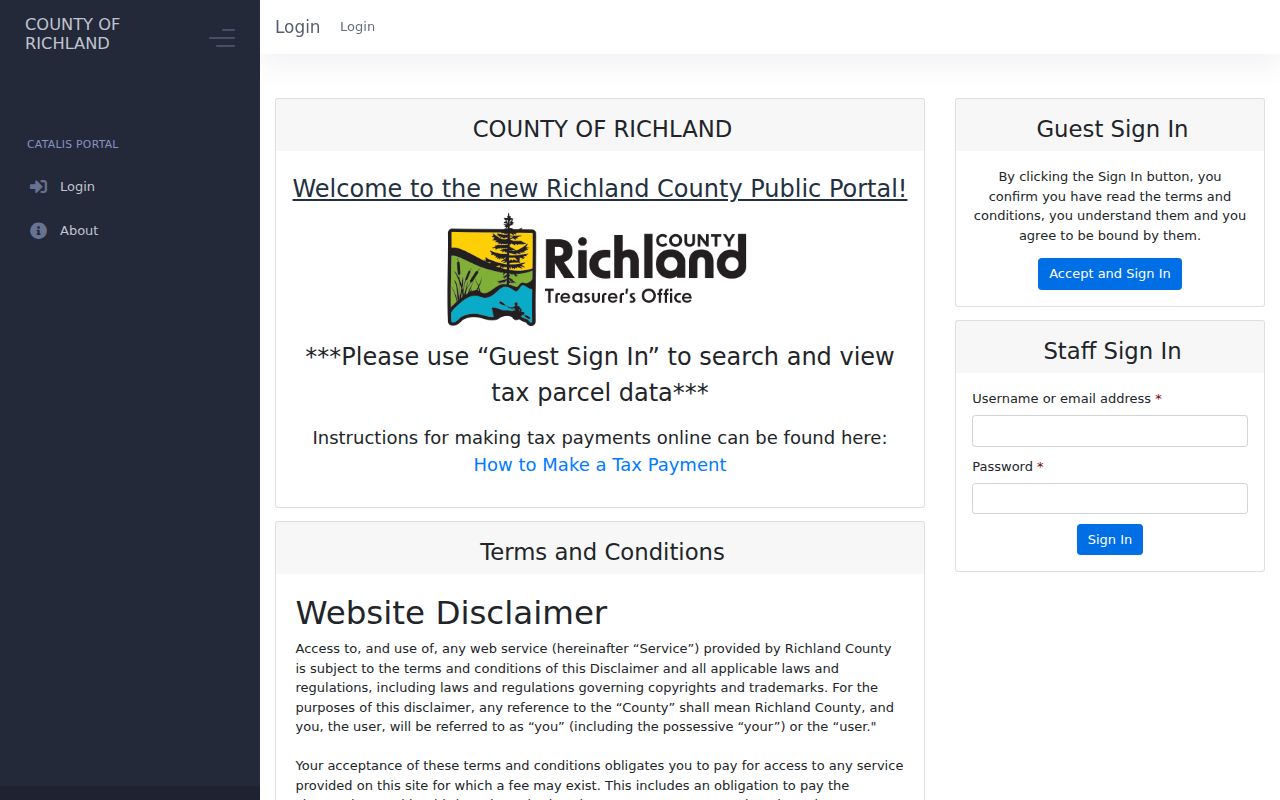
Carry the parcel number forward. It opens both the deed record and the GIS map. The Real Property Lister bridges the two. The Lister maintains ownership, situs, and mailing fields, plus the legal description, acreage, parcel number, and district information. A portal owner field is convenient. The deed still names the conveyance's parties. After a recent closing, compare the deed's recording date with the tax roll's October 15, 2025 transfer cutoff rather than expecting every system to update at once.
Richland County Owner and Address Fields
Three fields carry different meanings. The owner field names the party carried in the tax system. The mailing address is where a tax notice goes. The situs address locates the land itself. A bill can go to a lender or an out-of-county owner. It can also go to another correspondence address without moving the parcel. With a known address, match the situs to the map and parcel number first. Search by name only. Then compare municipality, legal description, and mailing address before combining two results. The Lister treats all of these as parcel fields. Acreage and school districts sit alongside them, along with vocational and special-purpose districts.
Why a Richland County Owner Name Can Lag
Timing explains most ownership mismatches. The current Richland County tax system reflects real-estate transfers recorded through October 15, 2025 for the upcoming cycle, apart from certain split parcels. A later deed can be recorded. The next bill may still show the prior owner. Neither record is wrong. One system may show the seller while the deed index shows the buyer. Splits add another wrinkle: Richland County delays split parcels in Henrietta, Ithaca, Marshall, and Richland until the following year. The GIS CSM history and recorded CSM can show the new lot before the tax system changes its parcel structure. Compare dates and legal descriptions, not the newest screen.
Richland County Trust and Entity Owners
Legal title often sits with an entity. A trust, limited-liability company, estate, or personal representative may hold it. The deed may name an individual only as trustee or representative. The tax card may shorten the entity name. Search the exact wording on the instrument as well as the parcel owner field. Never assume an entity has a public list of beneficial owners. Its link to the land comes from the deed. Check the grantor, grantee, and legal description. The deed's date matters too. An entity may have changed its name or status since the transfer. For a Wisconsin LLC or corporation, the Department of Financial Institutions corporate search adds public filing context, including the exact legal name and registered agent. Treat that as an entity reference only. A registered agent receives business notices. That role alone does not establish personal ownership, residence, or control of the Richland County parcel.
Estate Transfers in Richland County
After an owner dies, the tax field can still show the estate for a while. A later transfer updates the roll once it reaches the county. Search Wisconsin Circuit Court Access under the decedent's name for a probate lead. The docket may lack the order you need. Ask the Register in Probate for the file itself. Then search the deed index. Look for a personal-representative deed, a trustee deed, a survivorship instrument, or a transfer-on-death document.
Obituaries and family-history sources make useful clues. They can surface a name variation or a death date. They cannot prove title. Two things tie the estate story to the land. One is the parcel legal description. The other is the recorded instrument.
A probate docket may name a personal representative or point to an estate proceeding. The land transfer can still appear much later in the deed index. The public docket may not explain a transfer. Request the Register in Probate file at that point. Wisconsin vital records carry their own eligibility rules and time-period limits. An obituary, genealogy index, or certificate answers only the question it can answer. None of these substitutes for a recorded deed covering the parcel.
Richland County Postal City and Tax Town
A mailing label from Richland Center, Lone Rock, Muscoda, or Hillsboro proves little about jurisdiction. Rural postal geography crosses city, village, and town lines. Check the county GIS Municipality and address-point layers. The tax portal's municipality field helps too. Together these tools locate the jurisdiction that keeps the assessment or permit record.
Near Richland Center, compare its extraterritorial boundary and any annexation or CSM file. A postal address names one place. A tax municipality can name another. A planning jurisdiction can differ from both. That matters when choosing an office. A city postal label alone will not send an assessment appeal to city hall. Nor does it make the city custodian of a town parcel's permit file. Check the municipality shown on the tax parcel. Use the GIS boundary layer to find the assessor or local zoning office. Ask that office for the record it keeps.
Richland County Owner Name Alert
The Register of Deeds offers a free Property Fraud Alert. It checks enrolled names against newly recorded documents and sends notice of any match. Treat it as an early-warning service for recordings. It will not settle who owns a property, and it cannot block a transfer. A match may also point to a different person. A spelling variant can slip past entirely. Compare the document number and the parcel before acting. For a current-owner check, the owner-of-record page focuses on the tax roll date. It also covers the latest deed.
Limits of a Richland County Owner Search
A name on the tax roll is an administrative owner field. It is not a guarantee of clear title or occupancy. A new deed may post after the roll date. A trust or estate may hold legal title. A protected person may use a substitute address through Wisconsin Safe at Home. Court data can also omit protected identifiers or documents.
Use the owner result lawfully. A Richland County ownership search is for property research, purchase review, tax questions and civic use. Do not use owner information to stalk, threaten or harass anyone.
A Richland County tax record shows who pays the bill, not always every legal owner of record. For real certainty, order the recorded deed from the recorder and get a title review.