
Richland County Property Value Types
One parcel can carry several numbers. The assessed value belongs to the local tax roll. The Treasurer's portal also lists fair market value and assessment fields. A recorded sale price belongs to a deed record. The public portal may not display a price for every transfer. Before treating these figures as interchangeable, compare the label. Also compare the year and the source of each number.
| Value Type | What It Means | Record Location |
|---|---|---|
| Assessed value | Local assessment figure used in the tax process | Municipal roll / county tax portal |
| Fair market value | Portal field for the property's market-value estimate | County tax portal |
| Last sale price | Consideration reported for a transfer when shown | Recorded deed or transfer-return record |
| Land and improvements | Separate value components if displayed | Assessment parcel record |
State law sets a municipal goal of assessing at full market value. Even so, a single parcel can sit above or below a recent sale. An assessment difference alone is not proof of an error.
Looking Up a Richland County Property Value
Start with the tax parcel portal to pull up the value record. Copy the label and tax year exactly as displayed. The Real Property Lister maintains the parcel number, the owner of record, addresses, and the legal description. The Treasurer's portal adds fair market value, assessment data, tax bills, and receipts. Search screens can change. Rely on the record fields themselves rather than one fixed layout.
- Search the property by situs address or parcel number in the guest portal.
- Confirm the municipality and legal description for the selected parcel.
- Record the assessed and fair market fields with the year shown.
- Check the recorded deed separately for a sale or transfer reference.
- Use DOR municipal ratios for aggregate context, not as an individual appraisal.
- Assessment
- The local value entry on the municipal roll.
- Market value
- An estimate of value in the market, not a guaranteed sale.
- Assessment/sales ratio
- Assessed value divided by sale price for ratio analysis.
- Equalized value
- A state-level valuation used in aggregate municipal comparisons.
- Reassessment
- A local update of parcel values; a specific Richland Center last-revaluation year was not verified.
The Richland County public tax and parcel portal offers the guest route to parcel value fields.
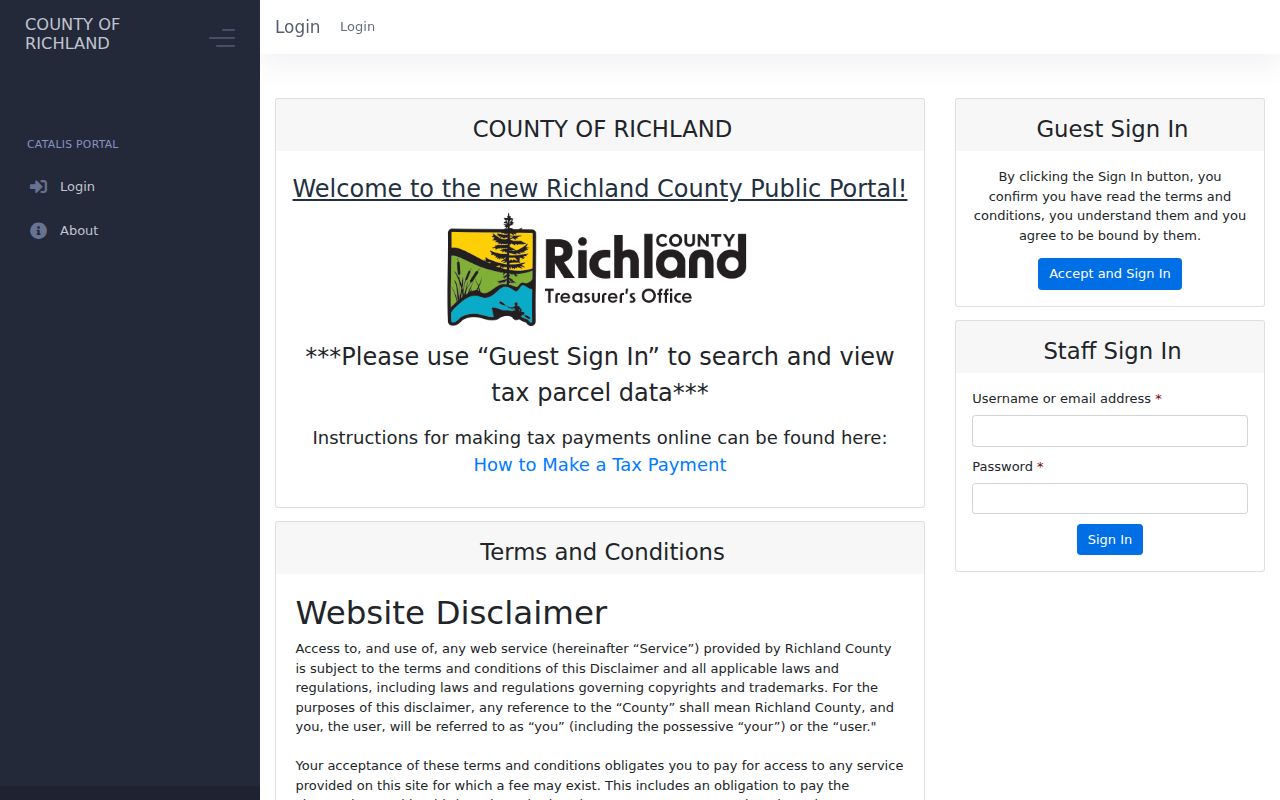
The portal search view lists matching parcels. Open a result to read its value and year labels.
Wisconsin's Assessment Ratio
Wisconsin's Property Assessment Manual sets a clear goal. Property should be assessed at 100% of market value at the municipal level. The assessment/sales ratio compares a parcel's assessed value with its sale price. Specifically, it uses the price paid in an arm's-length sale. DOR also publishes aggregate ratios that measure municipal assessment totals against equalized value. These tools describe the general level of assessment. They are not exact adjustment factors for one home.
A parcel can sell for more or less than its assessment. The values carry different dates. Sales themselves vary, and the municipal roll updates on its own cycle. A ratio report places local totals in context. A current appraisal or comparable-sale analysis answers a different question altogether.
For a parcel-specific comparison, gather a few basics. These include the sale date, the recorded consideration when available, the assessment year, and the municipality. One sale can distort a ratio. Causes include a nonstandard transfer, a remodel, a partial-interest conveyance, or a legal-description mismatch. Aggregate municipal ratios show how the roll compares overall. Never apply them as a mechanical multiplier to a single property.
The Wisconsin assessment manual describes the market-value goal and the ratio method. DOR posts municipal aggregate ratios and statistics as well.
Richland County Recorded Sale Prices
A deed records the transfer and its parties. The public tax portal does not clearly display consideration for every parcel. So treat a displayed assessment as an assessment, not a last sale. To trace a recorded transfer, search the Register of Deeds index by grantor or grantee. Then read the instrument or the real-estate transfer return where available.
Check the recorded date and the legal description before comparing a sale with a parcel value. A sale can predate the assessment year. It can include conditions the record never shows. Or it can cover a larger or smaller tract. Keep the sale and the assessment as separate evidence.
The county's deed index is the route to a recorded transfer. When price matters, search the grantor and grantee names. Open the instrument and transfer-return record. Confirm the conveyance covers the same parcel. Note that a deed's transfer date and its recording date can differ. So preserve both when matching the sale against an assessment cycle in the property records.
Richland County Land and Building Values
The parcel system holds the assessment and value data. Every public result does not separate the land and building pieces. When the card shows both components, record each field and its year. When it shows a single total, leave it alone. A component split should never be guessed from the map or from a neighboring parcel.
Pull the parcel number and compare the assessment card against the municipality's tax roll. A new CSM, a parcel split, or a corrected description can shift things. It can change which land area belongs to a value record. Split parcels in Henrietta, Ithaca, Marshall, and Richland can sit delayed in Richland County. They may wait until the next tax year. Check the recording and roll dates before concluding anything moved.
If the roll divides land from improvements, copy the component values. Copy the total exactly as labeled. Land value reflects acreage, access, zoning, or location. Improvement value tracks structures and recorded property characteristics. A missing component cannot be inferred from a neighboring lot or the parcel shape. When the displayed area changed, ask the municipal assessor or Real Property Lister. Ask which property-card record matches the parcel.
Richland County Value Trends
There is no city-only time series for Richland Center, and no published last-revaluation percentage. Parcel-specific assessment records remain the defensible route for comparing local value trends. DOR's municipality-level ratios carry their own dates, so pair them accordingly. The county portal shows fair market and assessment fields. DOR publishes the aggregate reports. A countywide trend can never substitute for one parcel's history.
Richland Center's plans and downtown materials show where land-use changes are under discussion. Industrial-park site plats and planning-commission packets do the same. They may explain a CSM, rezoning, or annexation shaping a property's context. They do not establish a value. The numeric claim belongs to the recorded parcel data.
For a real time comparison, pull the same parcel's assessments across several years. Note any split, improvement, or description correction in between. A countywide increase can hide big municipal differences. A municipal ratio can move while an individual property stays untouched. State a trend only when a dated parcel record or state report supports it.
Richland County Tax and Value Split
Property value and tax owed are related but not identical. A tax bill reflects the levy and the parcel's share of the taxable base. Credits and adjustments recorded for that parcel also shape it. The bill may split between a municipal first installment and a county-collected second installment. Value figures answer what a property is assessed at. The county tax record answers bill, payment, credit, and balance questions.
That distinction prevents a common error. A higher bill does not mean market value rose by the same percentage. Assessment changes and levy changes need separate review.
Lottery credits and similar adjustments can change the amount due. They do not touch the assessed value itself. The Treasurer's parcel system labels the bill, receipt, balance, and lottery-credit functions. Read the charge details and payment status for the tax year first. Only then consider whether the underlying property value actually changed.
What Richland County Assessed Value Means
An assessed value is a local tax figure, nothing more. It is not a market appraisal for a sale, refinance, or purchase negotiation, and it may differ from the price a buyer would pay today. Its date matters too. Even the fair market field is an estimate held for assessment purposes, not a certified opinion of value from a licensed appraiser.
Value is not price. Use the assessed value to understand the roll. For a transaction-specific opinion, use a qualified appraisal and review current comparable sales.
The assessed value only tells part of the story. Always pair it with its parcel number, date, and source. For appeal deadlines and how the tax bill is calculated, the Richland County property tax records page covers that process in full.