
Richland County Deed Records Explained
The Register of Deeds holds warranty deeds, quitclaim deeds, and other deed types, plus mortgages, real-estate financing statements, federal tax liens, and miscellaneous documents. A deed names its parties. It also fixes the recording reference. The deed type helps explain a transfer. Still, no label answers every title question on its own, so check the legal description, the signatures, the recording reference, and any later instruments that touch the same land.
| Instrument | Record Role | Search Use |
|---|---|---|
| Warranty deed | Recorded conveyance of a real-estate interest | Review the deed conveying title and its legal description |
| Quitclaim deed | Recorded transfer or release of whatever interest is conveyed | Check family, corrective or other interest changes |
| Mortgage | Records a real-estate financing interest | Search borrower and lender names, then look for release |
| Federal tax lien | Records a filed lien document | Search the party and later release or satisfaction |
| Real-estate financing statement | Indexed real-estate-related filing | Read collateral terms instead of assuming it is a deed |
Deed records give you the recorded transfer. Use the encumbrance index for later mortgages, assignments, and releases. A county recording entry proves an instrument was filed. It is not a legal opinion that title is free of every claim.
Read the instrument itself, not just the index label. Names and recording references help you locate a deed. The granting language and the legal description tell you what land and interest it covers. A corrective deed, a transfer between relatives, or a quitclaim can change the record without being an ordinary sale. Something looks odd? Compare the instruments before and after it, then ask the Register of Deeds which record image supports the index entry.
Richland County Grantor and Grantee Searches
A grantor conveys an interest. A grantee receives it. The Register of Deeds index links transfers through those party roles. To trace one parcel backward, start with the latest known grantee, find the grantor on the deed into that owner, then search that same name as an earlier grantee. Chains often cross trusts, estates, and entity names. Use the legal description and parcel number as checks instead of trusting a name alone.
- Find the likely current owner or parcel through county tax records.
- Search that owner as grantee in the deed index and note the instrument reference and recording date.
- Read the grantor name and exact legal description from the deed.
- Search the grantor as a prior grantee and repeat the comparison.
- Stop when the indexed years end, then ask the Register of Deeds about earlier volumes.
No exact Tapestry search fields or earliest indexed year appear online. Do not read a cutoff into a search screen. Office staff can say whether an older name entry sits in an index book, a deed book, or on microfilm.
- Grantor
- The party shown as conveying the interest.
- Grantee
- The party receiving the interest.
- Chain of title
- The sequence of recorded instruments that links ownership over time.
- Book and page
- A volume-and-page reference; a modern instrument number identifies a specific recorded document.
Tapestry and Laredo Access
The county positions Tapestry EON for occasional users and Laredo as a fee-based subscription for title, real-estate, and other firms that need daily deed records access. The Register of Deeds page links both. Online images and copies may be purchased by credit card and opened at once to print or save. The county states no copy price online. Confirm the current fee schedule before ordering. The Tapestry EON index is the occasional search route. The Register of Deeds page explains document access and the subscription links for deeper property search work.
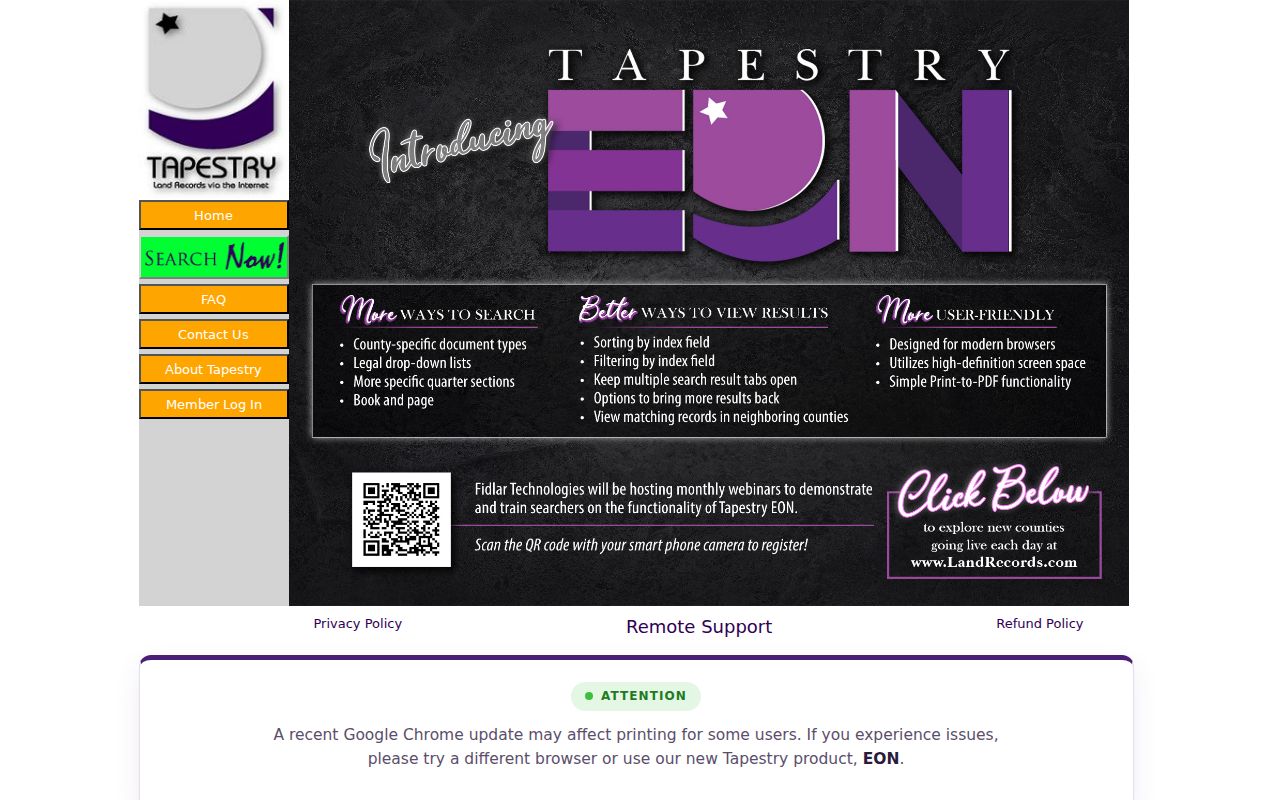
Save the document reference before leaving the index. Then decide whether a paid image or an office copy of the deed serves you better.
Requesting a Richland County Deed Copy
Copies work differently depending on what you need. For a deed already online, the county sells an image by credit card that you can print or save on the spot. Certified copies take a different route. The Register of Deeds sits at 181 West Seminary Street, Room 3, Richland Center, WI 53581, and takes phone calls at 608-647-3011 or email at regofdeeds@co.richland.wi.us. The county directory also lists a fax line, 608-647-6134. Office hours run weekdays from 8:00 a.m. to 4:30 p.m., though the county asks visitors to confirm before traveling.
A good request names the parties, the parcel, the document type, and an approximate recording date when one is known. Ask staff which format is available and the cost. A plain image suits most deed records research. A certified copy is the formal version, stamped as a true copy of the recorded instrument. Neither one substitutes for a title search or legal advice on what the deed means.
Uncertain name matches happen often in old deed records. Offer alternate spellings only when the tax parcel or another deed backs them up. If the index gives a book-and-page or document number, include it, along with the legal description or subdivision name. A quick phone or email inquiry to the recorder can settle whether the image is online or needs staff help.
Recording status matters. A signed deed may not yet appear in the index. The county record confirms filing status, but a complete title review also checks later liens, releases, easements and related instruments.
Richland County Property Fraud Alert
The Register of Deeds runs a free Property Fraud Alert. It watches user-submitted names against documents recorded in the office. A match triggers notice. The county also advertises a Notary Fraud Alert for participating counties. Follow the county page for sign-up steps. A parcel address may not be accepted.
An alert can flag a recording that deserves a second look. It cannot stop a deed from being filed. It also cannot confirm a match is the same person. Where the service allows, include names that may appear on a deed, such as a trust or business. Keep up routine review of your property documents.
Older Richland County Deed Books
The Register of Deeds publishes no earliest searchable year on its official online page. No Tapestry index cutoff appears there either. No imaging cutover date is stated. Guessing a start year would mislead, so avoid any date the office has not announced. A chain of deeds can seem to stop. Ask the office directly which volumes, microfilm or historical indexes cover the period you need.
Richland County was created in 1842 and organized in 1850. Richland Center became the county seat in 1852. The courthouse itself dates to 1889. A pre-1850 land trail may run through territorial records, federal land patents or parent-county sources. Later in the century, the Wisconsin Historical Society's 1895 county plat book offers a different kind of help. It maps townships, villages and city parcels. It can point to a period owner or section. Only deeds and legal descriptions prove the transfer, though.
Local records do not all survive online from 1842. The creation date is not a promise that they do. A nineteenth-century search may move between county deed books and federal land records. It may also reach the files of whatever jurisdiction held the land earlier. Ask the Register of Deeds which index series fits your date. No old street address may exist. Use the section, township or named plat as the search key. The 1895 Richland County plat book is useful context. It helps when modern streets and older parcel descriptions refuse to line up.
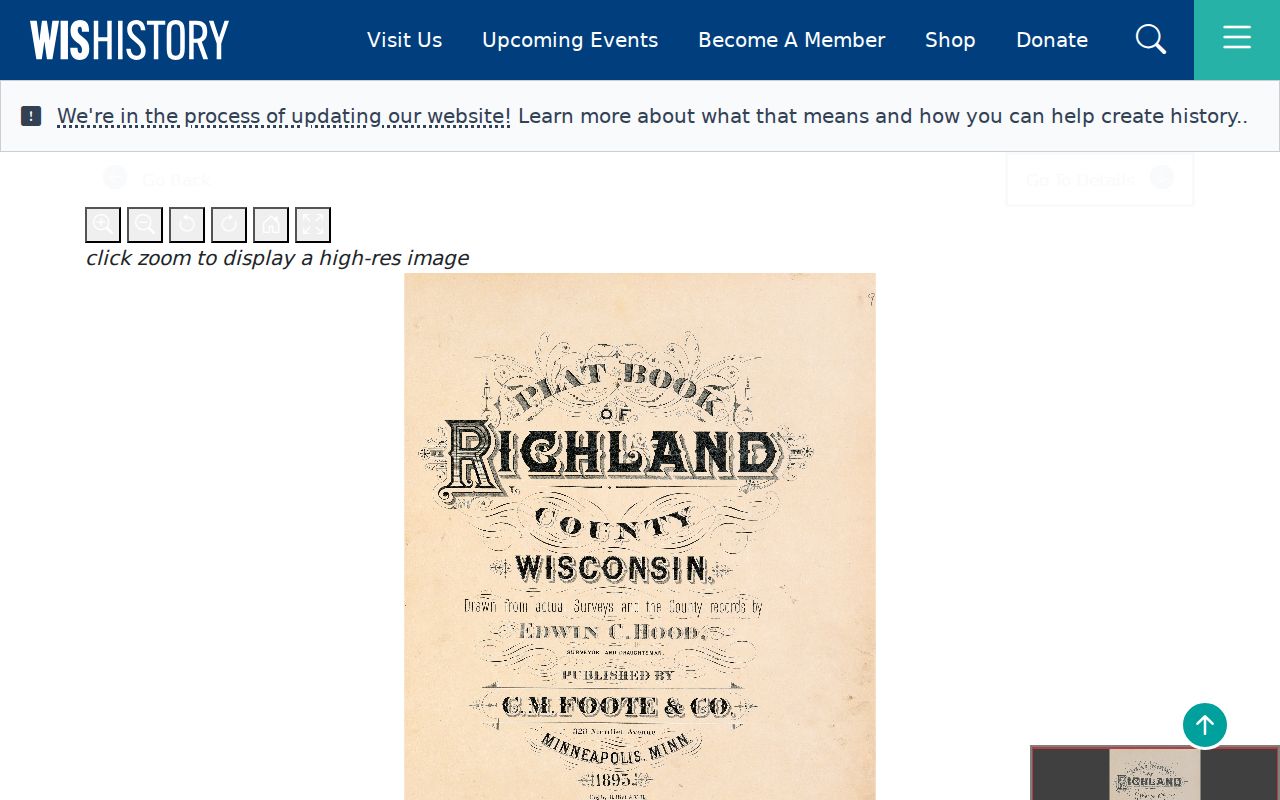
Use the plat map to form a search lead, then verify each transfer in the deed chain itself.
Richland Center Names in Older Deeds
Richland Center's Chapter 601 street ordinance works as a local crosswalk for documents written in older street and addition names. It covers the Original Plat. It covers Schoolcraft and Haseltine's Addition too. The ordinance changes Hascal Street to Park Street, and it records Lincoln and Ward Street references. A search keyed only to a current street name can miss historic wording buried in a deed or plat.
Search Hascal and Park together. Add Schoolcraft or Haseltine's Addition when the instrument points that way. Before assuming two entries describe different lots, match each result against the original legal description and the historic map. The ordinance and the atlas help with identification. Neither replaces the recorded deed itself.
The former-owner record trail focuses on moving backward from a current grantee through the county index.
Richland County Mortgages and Releases
A deed search alone does not answer a lien question. Richland County lists mortgages, real-estate financing statements and federal tax liens. Federal tax liens and miscellaneous documents also count among its repository records. A mortgage may be indexed under borrower and lender. A satisfaction, assignment or release may be recorded much later. Compare names, parcel description and document dates across the whole set before drawing conclusions.
Wisconsin Circuit Court Access can surface a public case number. It can also show the parties and docket events in a court dispute. The underlying filing itself usually must be requested from the Clerk of Circuit Court. A docket is not the same as a recording. Compare it with any recorded lis pendens, judgment, release or sheriff's deed. Those are different events. They can sit in different offices. The Wisconsin Circuit Court Access search can help find a case by party or county. It can show docket context before a court-file request.
A docket entry is only a lead to the court file. Confirm any land transfer or lien in the recorded instrument itself.
Limits of Richland County Deed Records
An index is a finding aid, nothing more. It may return a similar party name. The office does not publish every live search field, filter or historical year. Open and read the instrument. Confirm the legal description, and check for later filings that affect it. An easement or property-line question calls for care. Compare the deed with the recorded CSM or survey. A clear-title question belongs with a title professional. That professional reviews the full chain and interests.
County deed records document recorded instruments only. Private agreements that were never filed do not appear there. A recorded deed also cannot tell you who occupies the property. When online search falls short, use the office's counter and copy channels.