
Tracing Former Richland County Owners
A title history grows from dated instruments, not one parcel screen. The online deed index and older sources each have their own limits. Richland County publishes no earliest year for its online index. That makes any stated start date a guess. The county organized in 1850. Older land events may predate its own books entirely.
| Source | Known Coverage | Where to Find It | What It Adds |
|---|---|---|---|
| Tapestry EON / deed index | Earliest online year not stated | Register of Deeds links | Recorded parties, dates and document references |
| Deed books or microfilm | Ask the Register of Deeds for the years held | County office / courthouse records | Older grantor and grantee entries |
| 1895 county plat book | 1895 atlas | Wisconsin Historical Society | Landowner, township, road and acreage clues |
| Probate and estate files | Case-specific | WCCA lead, then Register in Probate | Authority for estate-related transfers |
Use the deed index for recorded transfers. Older books carry any chain that predates online coverage. Historical maps and library material can sharpen a lead. An obituary or plat may explain a name, but neither establishes a legal transfer.
A property history often shifts between record types as it moves backward. A modern parcel card supplies current identifiers. A deed book supplies the conveyance itself. Probate shows the authority behind an estate transfer. An 1895 plat can tie an old owner to a township or section. Keep a separate note for each source and record its date. That habit reveals whether a gap means an unsearched volume rather than a broken link in title.
Walking the Richland County Chain Back
Start with the newest deed into the current grantee. A grantor conveys the interest; a grantee receives it. Read the names and legal description closely. Then search that grantor as an earlier grantee, and repeat until the index shows no earlier instrument for the same land. Every step in the backward chain should connect through legal description, parcel context and a recording reference.
- Find the current parcel and owner field in the county tax portal.
- Search the current owner as grantee in Tapestry or another Register of Deeds route.
- Record the deed date, grantor, instrument reference and legal description.
- Search the grantor as a prior grantee and confirm the description still matches.
- Continue into older books or microfilm when the online index does not reach the next transfer.
- Grantor
- The party named as transferring an interest.
- Grantee
- The party named as receiving that interest.
- Chain of title
- The sequence of linked conveyances over time.
- Legal description
- The written land description used to match old records when an address changes.
Richland County's Unknown Online Cutoff
The Register of Deeds page links Tapestry and online copy access. But it names no earliest indexed year. The Tapestry search page likewise states no coverage range. Naming any cutoff year would mislead. Ask the Register of Deeds which grantor-grantee books and imaging periods are searchable online. Then ask which ones need an office or archival lookup.
When a search stalls, test spelling first. Try middle initials, entity names, parcel descriptions and street aliases. Then ask whether the document sits in a book or index outside the online system. An empty result is not proof that an older conveyance never happened.
For occasional users, one option stands out. The Tapestry EON deed index is the county's search route for recorded names and instruments.
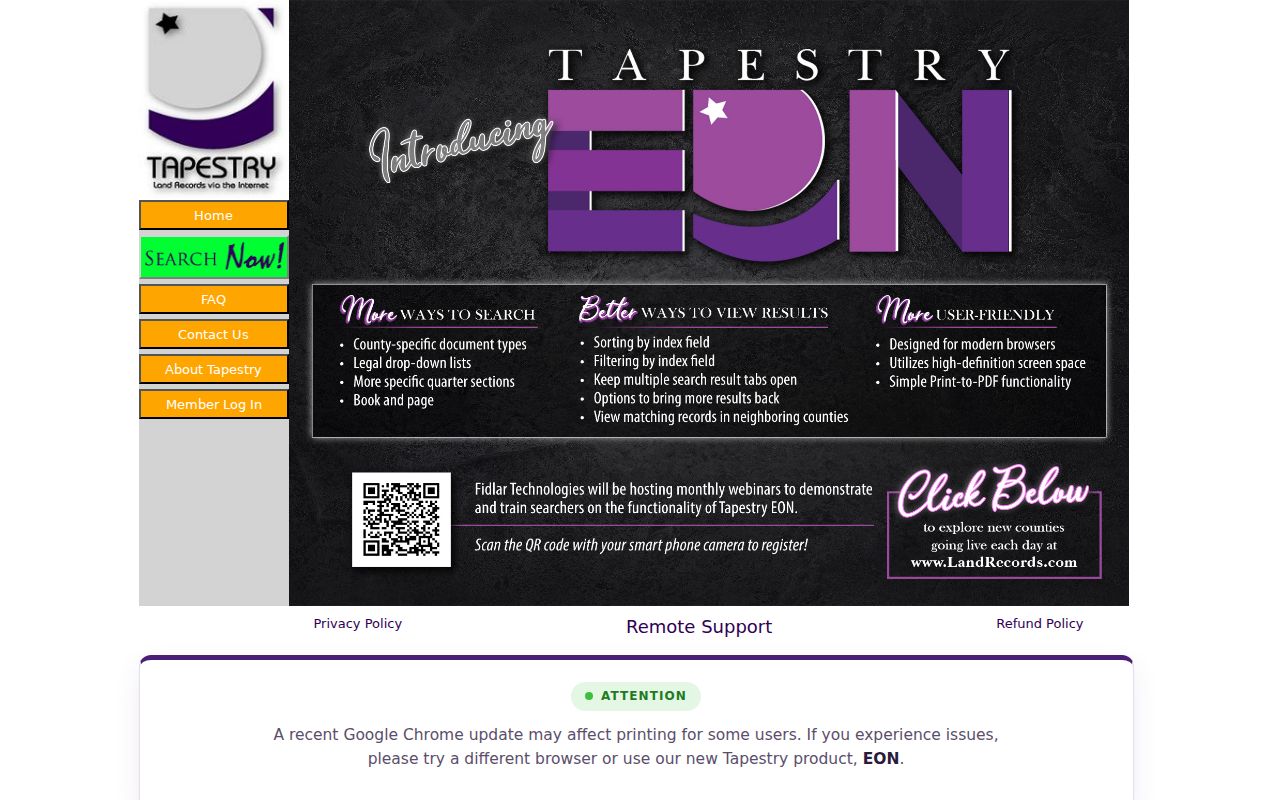
The index is where a search starts. When coverage is unclear, the county office can point you to the earlier record series.
Richland County's Older Land Trail
Richland County was created in 1842 and organized in 1850. Richland Center became the seat of justice in 1852. The present courthouse dates to 1889. Land events before local recording began may live in territorial records, federal patents or a parent county. The county publishes no confirmed first deed volume or full recording chronology.
Ask the Register of Deeds about volumes, indexes, microfilm and any missing period. The older record is still the target. A modern portal may simply not expose it. Do not invent a courthouse fire or record-loss story.
Because the county seat arrived in 1852, a land event can predate organized local recordkeeping. Federal land patent material may cover an original transfer. Later private conveyances belong in county recording records. The 1842 and 1850 dates describe the county's formation, not a guaranteed start for every deed series.
Richland County's 1895 Owner Map
The Wisconsin Historical Society's 1895 Richland County plat book spans 44 numbered pages. It was drawn from actual surveys and county records. It maps villages, cities and townships. A period landowner, acreage, road or section setting can all appear. That moves former-owner research from a historic name toward the modern parcel map.
Locate the old owner or tract first. Note the township and section context. Then carry that detail into the deed index and GIS. A plat is not a deed, though. A name printed on the map says nothing about whether the parcel later sold. It could also have passed through probate or been subdivided.
For a historic map of a Richland County chain, the digitized 1895 atlas is a strong companion.
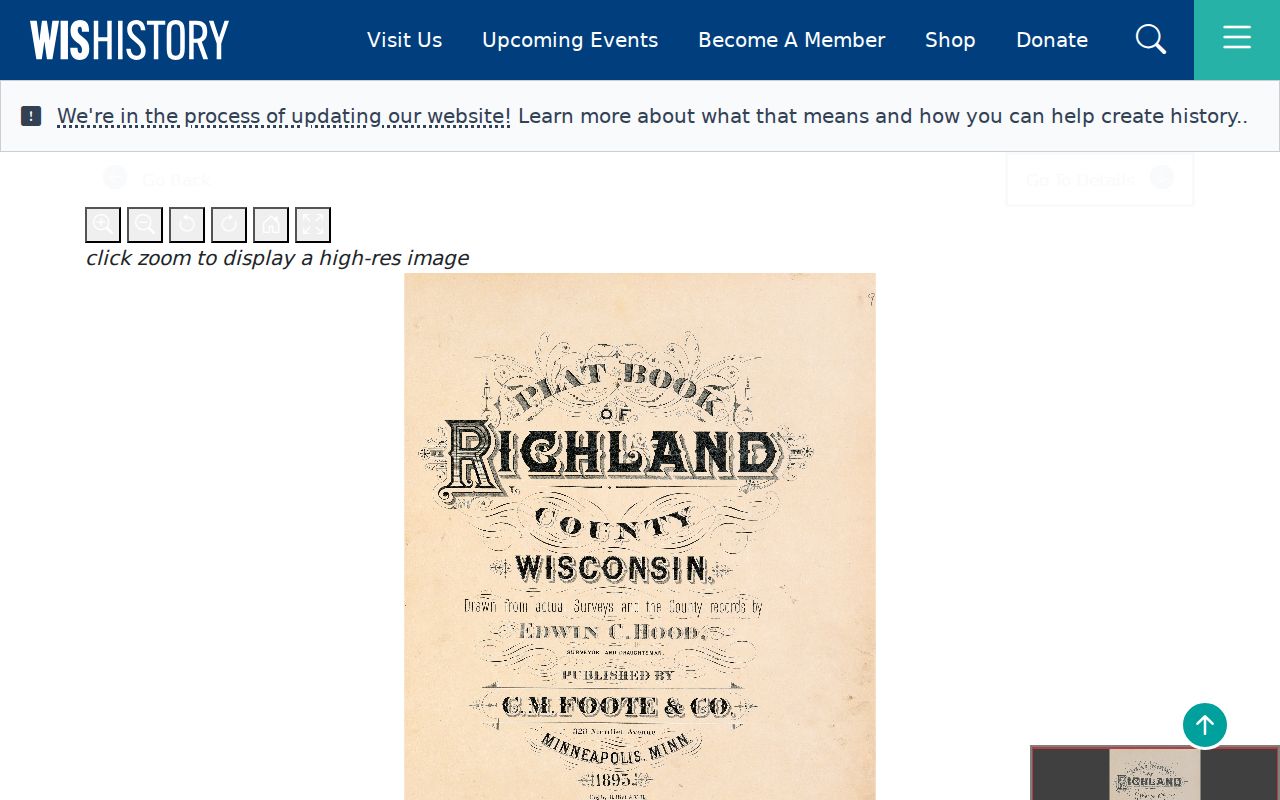
Use the map to form a lead, then confirm each owner with a recorded instrument.
Richland Center Street Name Changes
Street names in Richland Center have shifted over time, and old documents reflect that. Hascal Street, Schoolcraft, and Haseltine's Addition all appear in historic descriptions. Chapter 601 renamed Hascal to Park Street. It also laid out the numbered streets north of Union Street in Schoolcraft, and it recorded Lincoln and Ward references in Haseltine's Addition. A deed can sit in the index under its old street. The modern address may say something else entirely.
Search both spellings. Then match the lot and the legal-description text, not just the street name. An ordinance or an atlas can bridge the two locations. The deed itself remains the true transfer record. This small local step keeps former owners from disappearing whenever an address changes.
Richland County Probate Transfers
An estate transfer often changes how a name appears in the deed chain. Search the deceased owner, the estate, a personal representative, and any trust wording. WCCA can show a public probate docket. But petitions, inventories, closing papers, and orders are different. Those usually require a request to the Register in Probate or the Clerk of Circuit Court.
Next, search the Register of Deeds for the paper that moved title. That could be a personal-representative deed or a trustee deed. It could also be a transfer-on-death instrument, an affidavit, or a later sale. A Heritage Hub obituary can pin down a death date. It may also suggest a family relationship worth confirming in the deed records. Treat it as a discovery clue, though, not as proof of title. The Wisconsin DHS genealogy guide explains historical index periods. It also covers in-person access through its vital-record genealogy instructions.
Local genealogy research can explain why a name changed form. Confirm the actual land transfer in probate and deed records.
For certified vital records, the Wisconsin request page describes the application periods and who qualifies. State records generally begin October 1, 1907. Genealogy access follows different historical ranges. Births run through September 30, 1907, and marriages through 1967. Death records extend through 1971 with age-based limits. Some death certificates under 50 years stay restricted to eligible applicants. These are family-history routes, not ownership records. The Wisconsin vital-record request and search-period instructions explain which records can be requested and when.
Use the period chart to pick an eligible family-history source. Then return to the probate and deed records to verify the property transfer itself.
How Far Back Richland County Owners Go
How far back can you trace Richland County owners? The online depth depends on the office's books and indexes. County land history can reach nineteenth-century records. Yet the exact first deed volume and any online cutoff vary with what the Register of Deeds has digitized. For a complete legal chain, ask that office or a title professional. Either can check the older books and any abstract materials.
House history, not targeting. Former-owner research supports property history and due diligence. Do not use names, addresses or estate clues to track, threaten or harass a living person.
Need one deed copy or the county's index routes? Use the Richland County deed records page.
For a house history, a careful chain can stop where the record source changes. The path runs from the modern portal to the deed index, from the deed index to the older books, and then to probate or archival material for missing context. Title assurance is different. There, let a qualified professional decide whether the chain is complete and whether liens or easements still matter.