
Richland County Current Owner Record
On a county parcel, the current owner is whoever the assessment and tax system carries. The Real Property Lister maintains that owner information. The Lister also keeps the mailing and property addresses, the legal description, acreage, the parcel number and district fields. The tax portal offers a convenient view of the card. Still, the listed owner is tied to the roll's update date. For a current-owner question, treat the card as a dated administrative record. Then compare it with the newest recorded deed. Do this before drawing conclusions.
| Owner name | Party or entity carried on the parcel record |
|---|---|
| Mailing address | Destination for tax correspondence |
| Situs address | Physical property location |
| Parcel number | Identifier to carry between tax, GIS and deed records |
| Legal description | Written land description to compare with a deed |
| Transfer update | Roll status that may trail a new recording |
The owner of record is not always the occupant. A mailing address can point to an owner living elsewhere, or to a trust, an estate or a business. The situs address identifies the land itself. For guest access to the parcel record, the Richland County public portal is the route to use.
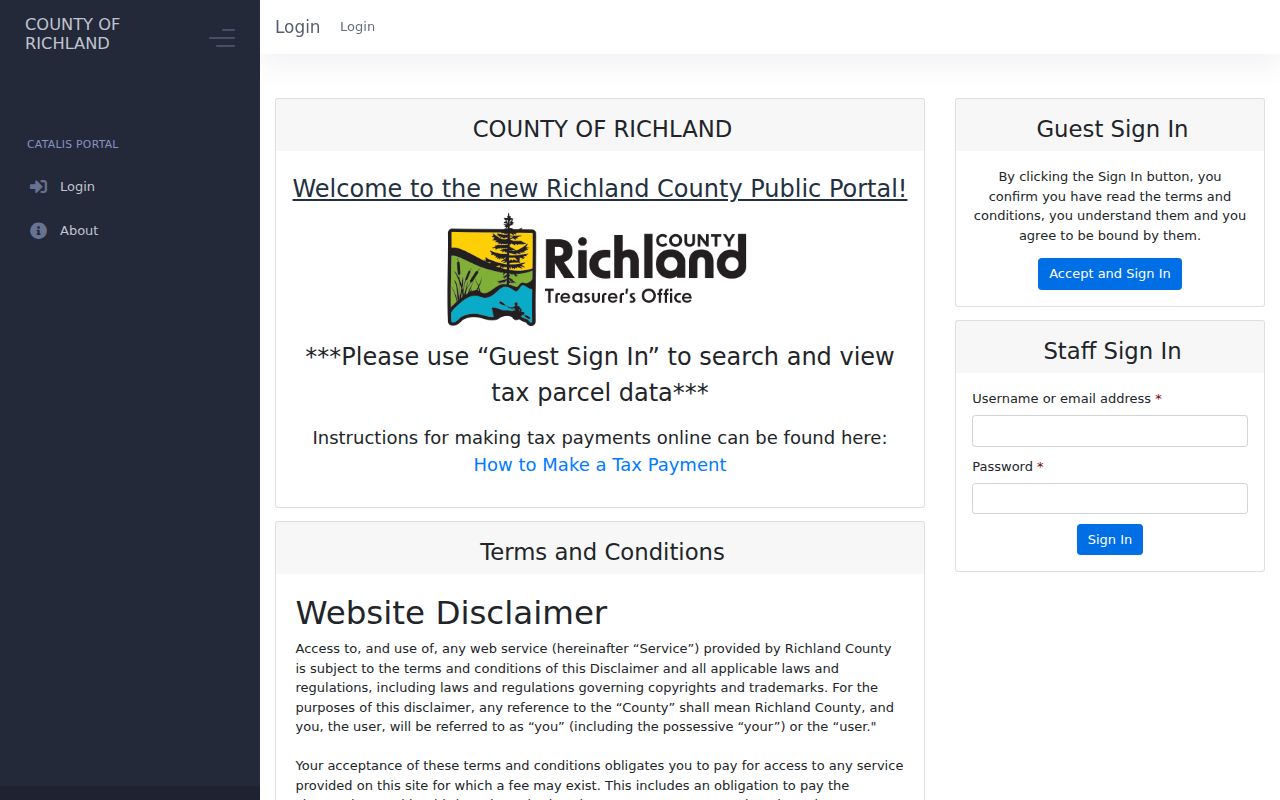
Use the parcel identifier from the portal when checking the deed and mapped location.
Richland County's Owner Roll Date
Timing drives most owner confusion in Richland County. The county states that its current tax system reflects real-estate transfers recorded through October 15, 2025 for the upcoming cycle. Certain splits fall outside that cutoff. A deed recorded after that date may name the buyer. The coming tax bill may still name the seller. That gap sits between the Register of Deeds and the tax system. It is a known boundary, not an error by either office. When the current owner seems unclear, note the tax year. Compare its cutoff with the date on the newest recorded instrument. The public roll answers who it carries for assessment and billing. The deed answers who received the recorded conveyance. Report those dates separately rather than blending them into one conclusion.
Confirming a Richland County Owner
Keep the confirmation route short and focused on the present record. Reconstructing older owners matters only for a chain-of-title question. Confirm the latest deed first. Then check the tax parcel describes the same land. If the deed date and roll date differ, look for a later filing.
- Read the owner, parcel number and legal description on the Catalis tax parcel record.
- Search the Register of Deeds index for the parcel's most recent conveyance.
- Compare the deed's grantee, legal description and recording date with the tax entry.
- Check for a newer estate, trust, correction or transfer instrument if the names differ.
- Ask the Register of Deeds or Real Property Lister to explain a record that remains unclear.
- Owner of record
- The party the assessment or tax roll carries as owner.
- Vesting
- The way a recorded instrument names the interest holder or capacity.
- Recording lag
- The interval before a recorded transfer appears in a later tax roll.
- Situs and mailing
- The physical property location and the separate tax-mail destination.
A just-completed purchase adds three distinct dates: execution, recording and the later tax-roll date. The deed index can show a recorded grantee. That grantee appears before the upcoming tax bill changes hands. That gap is normal. If the instrument is not yet indexed, ask the Register of Deeds about its filing status. Ask the Lister which cycle will reflect the update. Never describe a pending or unrecorded transaction as a completed county owner update.
Richland County Owner Address Fields
Mailing and situs are not duplicate fields. The Lister explicitly maintains an owner/mailing address and a separate property/situs address. A rural parcel may use a nearby postal city. Its legal municipality is a town. The bill can even go to a different county or state. When an address label does not match the property location, check the GIS address point and the municipality layer on the county GIS map. A mailing address is a contact route in the record, nothing more. It does not prove the owner resides there. Use it only for lawful property matters. Do not publish it as a claim about occupancy.
Richland County Trust and LLC Names
A current owner field may name a trust, a limited-liability company, an estate or a personal representative rather than an individual. Match the entity's exact wording in the deed. Include any trustee or representative capacity. Wisconsin DFI's business-record search can help verify a corporation or LLC name and its filing context. A registered agent is not automatically the landowner, though. The deed's grantee and legal description form the true link between the entity and the parcel. An entity search adds useful context. It cannot establish title to a specific tract by itself. Keep the spelling and punctuation from the recorded instrument in your notes.
Richland County Parcel Split Timing
Parcel splits create their own timing puzzles in Richland County. In Henrietta, Ithaca, Marshall and Richland, the county delays some splits in the tax system. The delay lasts until the next year. A recent split can leave the old owner or the parent parcel structure visible on the coming roll. Meanwhile, a recorded CSM and the GIS history already show the change. That affects which parcel number appears beside the current owner. Before treating the roll as a full description of the present lot, compare three things. Look at the recorded CSM, the deed and the parcel history. The Lister's current-year split-bill contact is named on the county page. Ask that office which record controls the tax display for the year in question. The county's named exception covers certain splits in Henrietta, Ithaca, Marshall and Richland. There, separate tax parcels may not appear until the next year. A CSM lot can therefore carry a recorded legal description. Its tax account may not be divided yet. When a new parcel number is not yet visible, keep two references together in one note. Use the parent parcel reference and the CSM lot label. Then ask the Lister how the current bill is assigned.
Contacting a Richland County Owner
A letter is the ordinary way to reach a Richland County owner of record. Send it to the recorded tax address. That address is a mailing point, nothing more. It may point to an agent, a trustee, or a company. When an entity holds title, work from its public business contact details and the recorded deed itself. Those sources show its role. Guessing at the person behind a business name is a poor plan.
Richland County's Safe at Home program lets eligible participants use a substitute address. Courts can withhold protected details too. So a missing or altered address may simply reflect a privacy rule. Never try to work around a protected address system.
Richland County Recorded-Name Alerts
The Register of Deeds runs a free Property Fraud Alert. Submit a name, and you get notice when a newly recorded document matches it. That helps an owner who wants prompt word of filings. It will not stop an instrument from being recorded, though. It also cannot promise that every name variation triggers a match. Check the actual document number before acting on any alert.
Sign up through the county's official Register of Deeds page. An alert supplements regular deed record checks. It does not identify the current owner by itself.
Treat an alert as a nudge, not an answer. For a transfer verification, open the instrument. Confirm the recording reference, the parties, and the parcel description. Then compare the Lister's tax record when the next tax roll comes out. Whether a name alert covers a person or an entity depends on the service's signup rules. The county page carries the current enrollment details.
Limits of the Richland County Owner Record
The owner field in Richland County property records reflects the system at its stated update point. It proves little else. Occupancy is not shown. Nor does the field establish that a deed is clear of every claim, or that a mapped parcel line was surveyed. A trust or estate name hides nothing from public record, yet it does change the exact party wording the index displays.
Verify before relying. Compare the owner field with the latest recorded deed and use the parcel's legal description. Do not use owner information to stalk, threaten or harass anyone.
The current-owner check ends with the present instrument. For earlier transfers, see the Richland County former-owner chain.
The county parcel record exists for assessment and tax administration. It settles no questions about occupancy. It cannot confirm who may sign for a trust or company. It does not measure the effect of every easement or lien. When a closing, an inheritance, or a boundary dispute turns on legal ownership, review the recorded deed chain. Then seek qualified help. A single owner field is not a title certificate.